[NOMADE DES MERS] In the land of high-tech !
Publication date: June 9, 2019
Authors: Guénolé Conrad
Location: Taiwan
Since last year, more than half of humanity has access to the Internet and 2 billion personal computers are in use !
Despite all that electronics brings us, its sometimes excessive use poses serious problems today ! Depletion of precious resources, explosion of energy consumption, toxic dumps in the poorest countries… What could be better than a stopover in Taiwan to address this issue ?
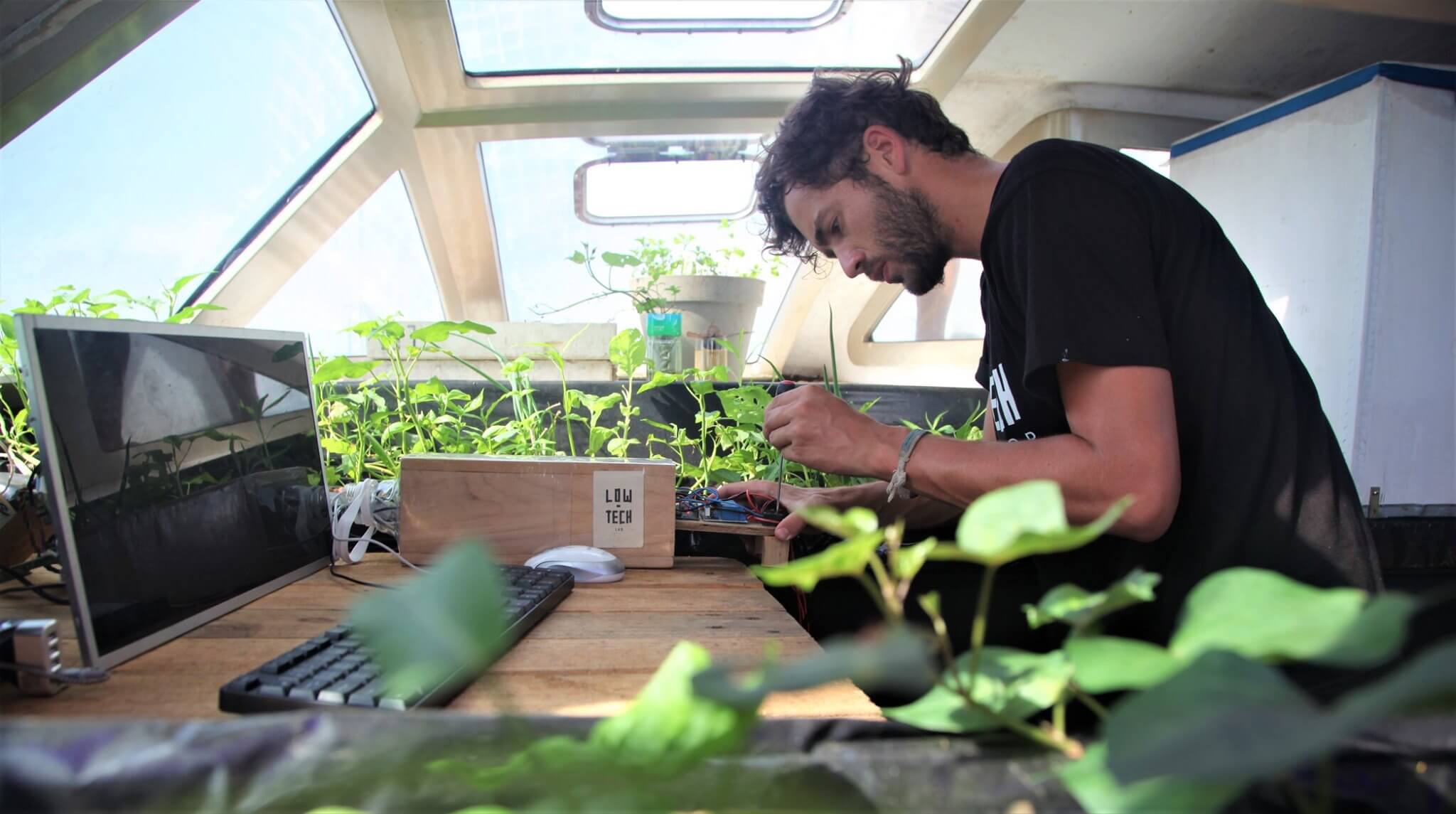
Our challenge: to create a low-tech computer! Accessible to all, low energy consumption, repairable, adaptable, open-source … A machine that would meet the needs of most of us: surfing the internet, sending emails, accessing Wikipedia offline and of course … the Low-tech Lab tutorials.
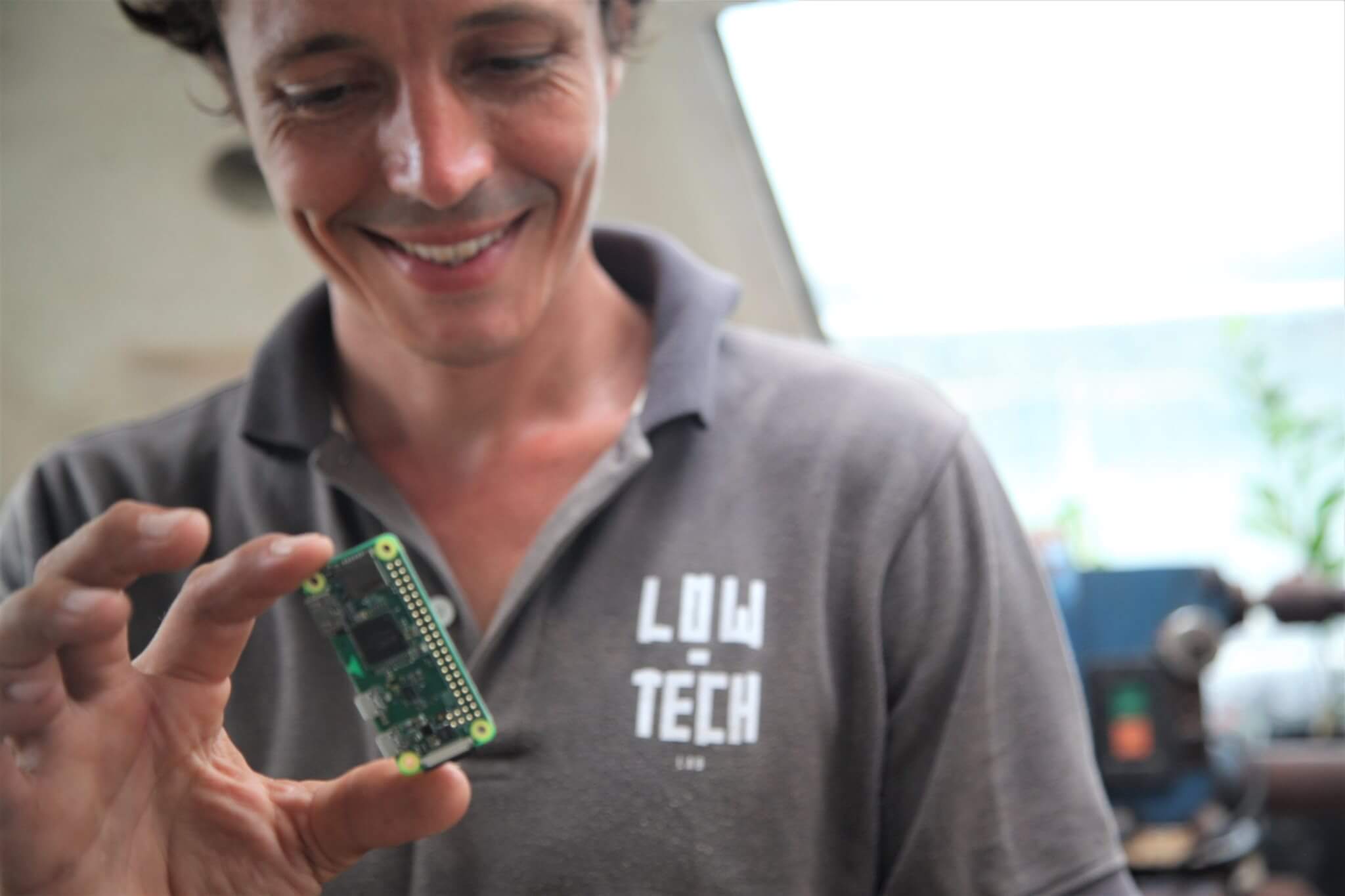
With the help of Gia, a French-Hong Konger who is passionate about computers and tinkering, we built our computer from a “Raspberry Pi Zero”. This electronic board, which fits in the palm of your hand, is a simplified computer…which costs only 10 euros ! We picked up the screen, mouse and keyboard from 寶藏巖 OpenLab.Taipei, a FabLab that specializes in recycling electronic waste. A few clicks later, we could browse low-tech on the web and enjoy dozens of free and open-source programs ! Quite a potential to make knowledge accessible everywhere in the world…
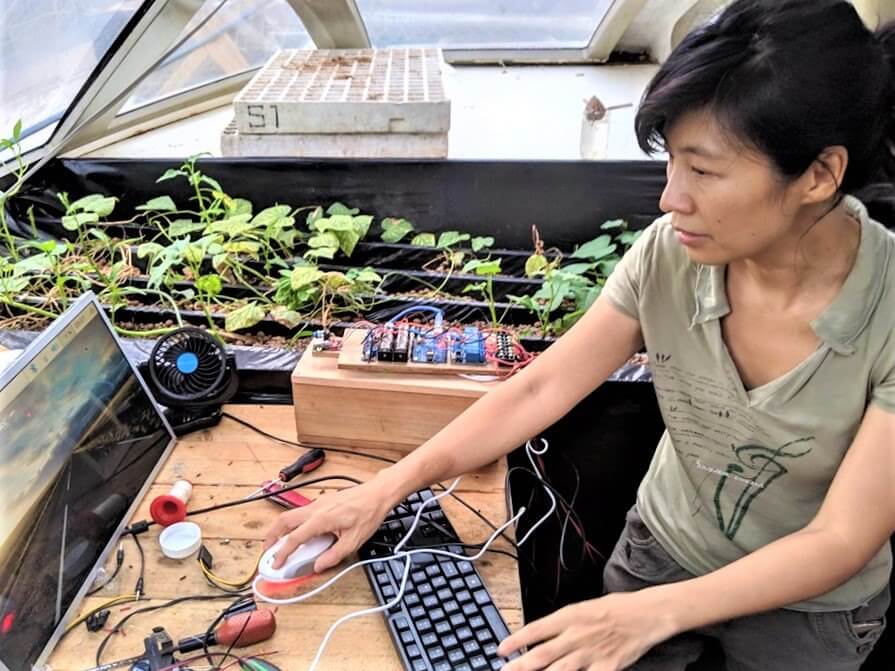
We took advantage of the stopover to optimize our onboard energy management system.
The solar panels of Nomade des Mers are now connected to an “Arduino” electronic board. This small module distributes the energy alternatively to the watering pumps of the plants, to the bubblers of the spirulina culture and the biofilters. New: a temperature sensor triggers the activation of a fan so that the mushrooms never get too hot. Thus, a very limited surface of solar panels benefits the whole ecosystem on board.
Next stop: Okinawa, the island of centenarians, where we will study some of their secrets of longevity !