[NOMADE DES MERS] The hydraulic ram pump from the Philippines
Publication date: April 23, 2019
Authors: Corentin De Chatelperron
Location: Philippines
The hydraulic ram pump #
Here we are in the archipelago after three weeks of eventful navigation in the China Sea, along the coasts of Borneo and Palawan. Two of us on the boat, with headwinds on the whole route, a first adventure in itself…
Our first mission brings us to Anangue. A remote village on the volcanic island of Negros, surrounded by jungle-covered hills and fluorescent green rice terraces.
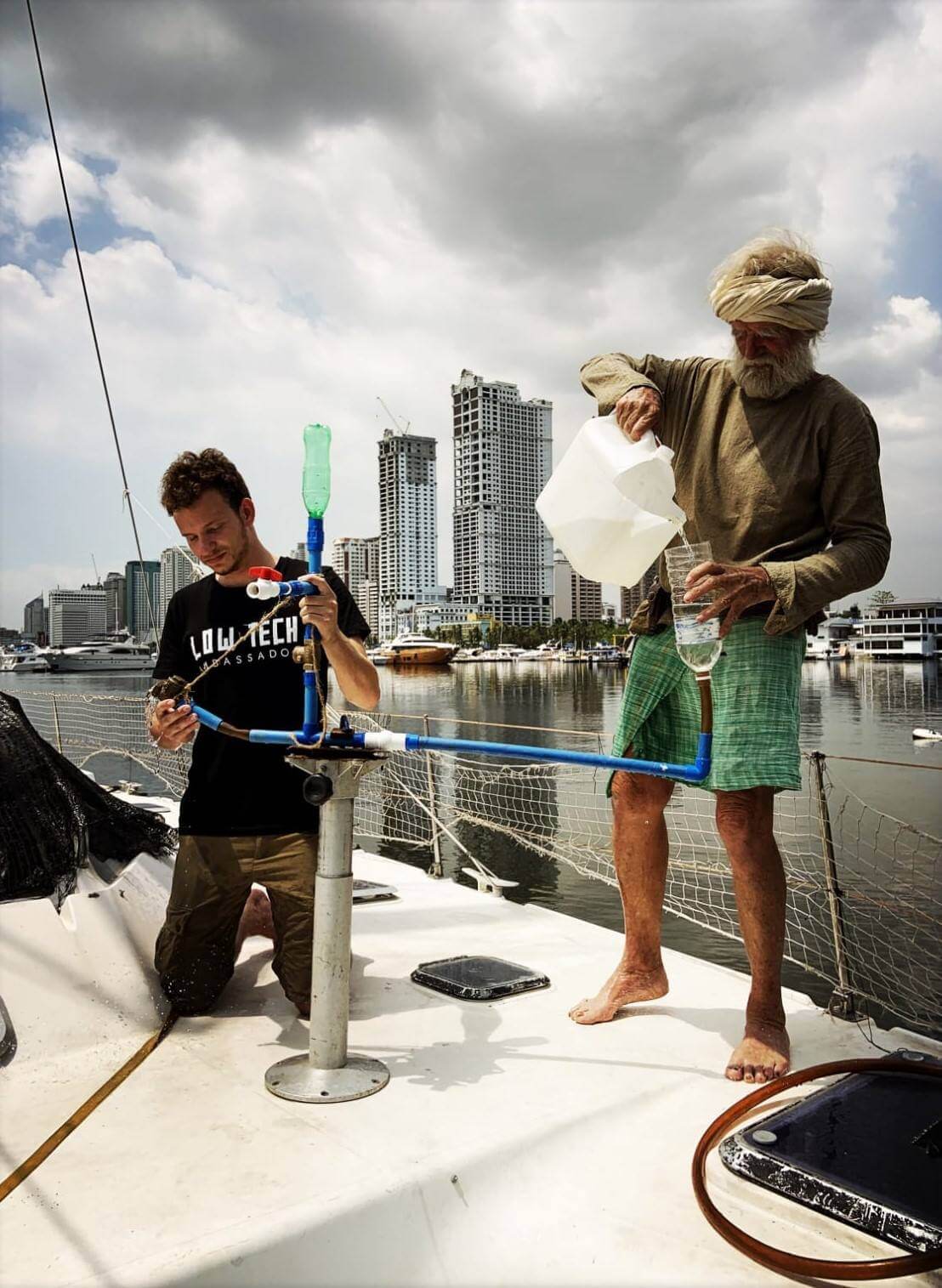
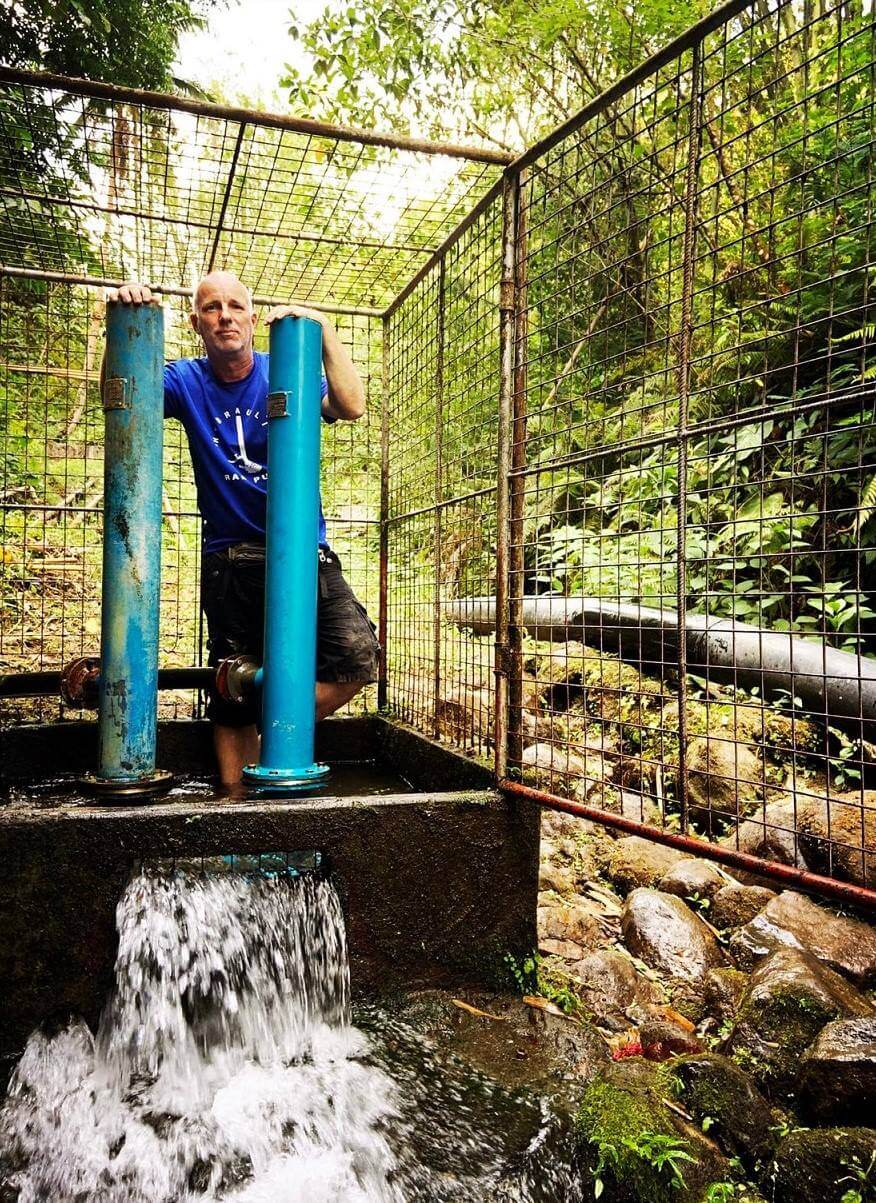
A characteristic beating has been resounding in this village for a few years. It is that of the “ram” pump. Made of only a few valves and metal pipes, it is a complex assembly of simple elements that gives a magical result. Installed in a stream, on a slope of only three meters of difference in level, it makes it possible to make rise water at the top of the hill, 80 meters higher, and without any energy contribution !
The ram pump is an old technology, invented more than 200 years ago by Joseph Montgolfier, to whom we also owe the famous hot air balloon. But its development potential remains largely untapped, while 800 million people in the world still do not have access to drinking water.
The social enterprise AID Foundation, Inc. has already installed these pumps in more than 500 villages in the archipelago, with a true low-tech spirit: the pumps have been simplified to the maximum to make them accessible, reliable and repairable locally. Here in Anangue, the arrival of water has allowed a whole economy to develop: citronella distillery, micro pig farms, field irrigation. The impact is impressive !
Thanks to Auke, founder of AIDFI, to all his team and to the community of Anangue who welcomed us these few days !